


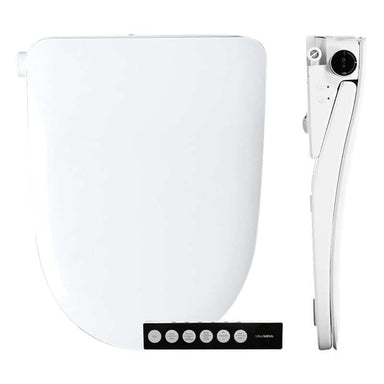


Who this actually matters for
Small bathrooms are the obvious case. When the closed toilet is the only surface in the room, it gets used as one whether or not the manufacturer intended it. Families with young children are the other: a closed lid is the step that gets a child to the sink, and it will be stood on daily for years.
It also matters if the toilet sits next to the bath or the shower, where people habitually sit on the closed lid to dry off or to help someone else wash. If that describes your bathroom, a sittable lid is worth prioritising over a feature like a night light or a remote holder.
What to check before you buy
- The published lid rating, listed separately from the seat rating
- Whether the hinges are metal-reinforced or plastic
- Whether the warranty covers the lid at all, and for how long
- Slow-close on the lid as well as the seat, since a heavier lid drops harder
How to tell if a lid is sittable
Manufacturers do not always label this clearly, so it is worth knowing what to look for. A sittable lid is thicker in section, usually with internal ribbing you can feel through the underside, and it is attached with metal-reinforced hinges rather than plastic clips alone. The spec sheet will normally give a lid weight rating separately from the seat rating — if only one number is listed, it almost always refers to the seat.
A lid with no published rating should be treated as decorative. The failure is rarely dramatic; the lid flexes, the hinge mounts deform, and the lid stops closing flush. By the time it is obvious, the hinge is already worn.
Why it is not standard
Bidet seats carry plumbing and electronics that a plain toilet seat does not. The lid has to clear the wash wand, the dryer outlet and the seat sensor, so it sits higher and spans further than a conventional lid. Building that span strong enough to sit on adds material, weight and cost, which is why it tends to appear on mid and upper range models rather than entry level ones.