













How Much Does a Decent Bidet Cost?
A decent bidet costs whatever the features you actually use cost. The price ladder runs from simple non-electric attachments at the bottom, through electric bidet seats with warm water and comfort features in the middle, to fully integrated bidet toilets at the top, as the guide to bidet pricing sets out. Everything in this collection sits in the lower half of that ladder.
To shop strictly by price, start with bidets and toilets under $500, then work up through the $500 to $1,000 tier. The step above that is luxury bidets, where remotes, auto lids, and premium nozzle systems come standard.
The running cost matters as much as the sticker
A bidet keeps paying you back after the purchase. Families often cut toilet paper use by 75 percent or more, and people who rely on a warm air dryer stop buying it almost entirely. Installation usually adds nothing, because most seats and attachments go on with an adjustable wrench and no plumber.
Is There a Downside to Using a Bidet?
The downsides of a bidet are real but small, and all four are worth knowing before you order rather than after. They are cold water on non-electric models, visible hardware at the back of the seat, routine nozzle cleaning, and a handful of bowl shapes that need a compatibility check first.
- Cold water. A non-electric attachment washes with whatever temperature your supply line is running, which is noticeable in winter. Warm water is the feature first-time buyers most often wish they had paid for.
- Visible bulk. Every electric seat is thicker at the back than a plain toilet seat, because the heater and the controls live there.
- Cleaning. Plan on a gentle wipe-down about twice a week and a deeper clean about once a month. A self-cleaning wand reduces the work but does not remove it, and bleach should stay away from nozzles and gaskets — see how to clean a bidet.
- Fit limits. Most two-piece toilets take almost any seat. One-piece, corner, and French-curve bowls can have restrictions, so confirm the model first.
What You Still Get at This Price
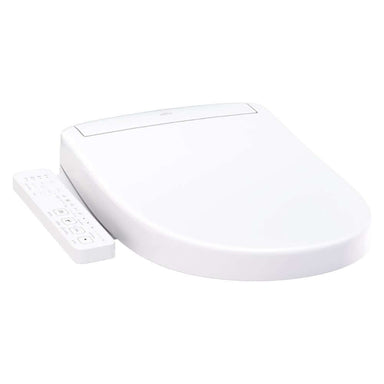
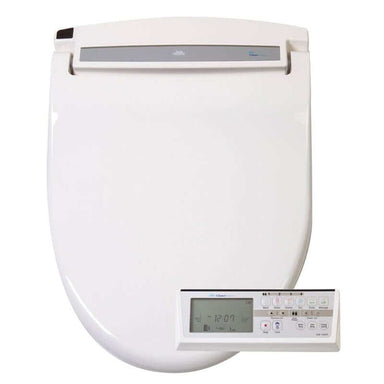
A budget bidet is not a stripped-down bidet. It is a bidet without the showpiece features. Front and rear wash with adjustable pressure, temperature, and nozzle position is standard across this collection, and so is a wand that rinses itself. The TOTO WASHLET S1 pairs an instantaneous water heater for continuous warm water with a self-cleaning wand and an arm control panel. The Brondell Swash EM417 offers strong, gentle, pulse, and oscillation settings across five nozzle positions, on a stainless steel nozzle that self-cleans before and after each use. Both are the everyday half of the experience, and neither costs luxury money.
How to Choose the Best Bidet on a Budget
The best bidet to buy on a budget is the one that fits your bowl, works with the outlet you already have, and includes only the two or three features you will use every day. Get those three right and an entry-level seat feels much closer to an expensive one than the price gap suggests.
1. Measure the bowl before anything else
Measure from the two seat-bolt holes at the back of the bowl to the front rim. About 16.5 inches means a round bowl; about 18.5 inches means elongated. Then shop round bidet seats or elongated bidet seats. Some models cover both: the Brondell Swash EM417 fits round and elongated toilets as long as the seat bolt holes are 5.25 to 7.45 inches apart, there is at least 1.5 inches between the mounting holes and the front of the tank, and the tank meets the bowl at roughly 90 degrees.
2. Decide whether cold water is acceptable
This is the fork that decides your price. Non-electric attachments wash with cold supply water and cost the least. Electric seats heat the water, and in this collection they do it without a reservoir to run dry — the TOTO WASHLET S1, S2, KS2, and KS5 each use an instantaneous water heater for continuous warm water, and the Brondell Swash EM417 uses a hybrid heater, so the warm wash does not run out mid-use.
3. Check the outlet
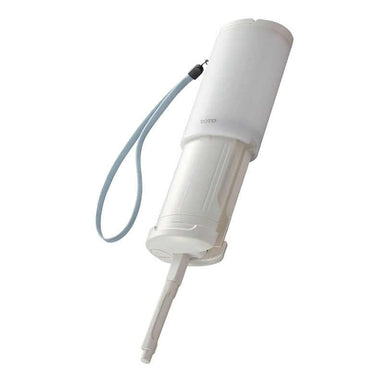
Every electric seat needs a grounded bathroom outlet near the toilet, and that is the one prerequisite you cannot work around with a wrench. If there is no outlet, or you rent and would rather not add one, a non-electric attachment or the battery-powered TOTO Travel WASHLET does the job without power — it runs on included batteries, offers two spray modes, and comes with a carry case. That is where most renters and outlet-less bathrooms start.
4. Pick the two features you would genuinely miss
Every extra function adds cost, so choose deliberately. The TOTO WASHLET A2 covers the basics with a heated seat, adjustable water temperature, and an oscillating spray from a side arm control panel, and no dryer. Move up to the S2 or KS2 and you gain a warm air dryer with three temperature settings; the S2 also adds PREMIST, EWATER+, an automatic deodorizer, and a nightlight. The KS5 trades the arm panel for a remote with memory settings for up to four users. Browse bidets with a dryer to see exactly where that feature starts.
5. Know what PREMIST and EWATER+ actually do
Both are bowl and wand hygiene features, not wash settings. PREMIST wets the surface of the toilet bowl, aiding in the removal of waste and resulting in a better clean. EWATER+ electrolyzes water to produce a sterilizing agent, hypochlorous acid, that keeps the wand and bowl hygienic. On this collection the WASHLET S2 is where they appear, which is a fair reason to stretch one tier above the entry models.
6. This collection includes toilets, not only seats
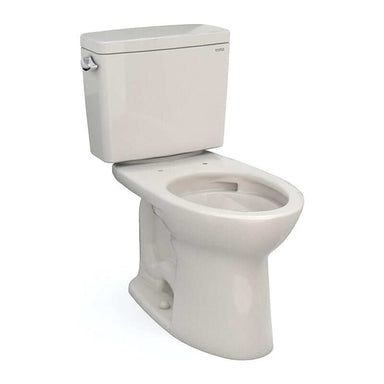
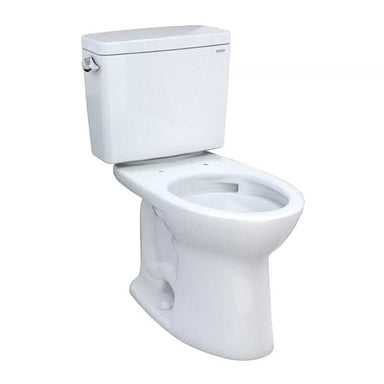
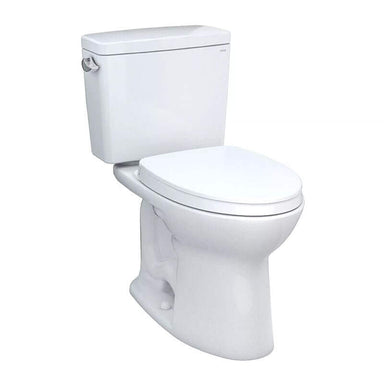
Alongside bidet seats, it carries value-priced TOTO Drake two-piece toilets, including Universal Height and Transitional versions. If you are replacing the fixture anyway, buying the bowl and the seat together is usually the cheaper path than doing it twice.