










What Makes a Bidet a Heated Bidet
A heated bidet is an electric bidet seat that warms the seat, the wash water, or both, and those are two separate systems with two separate controls. A seat can be sold as heated because the seat ring warms up, because the water arrives warm, or because it does both. Check which one a model means before you buy.
The heated seat
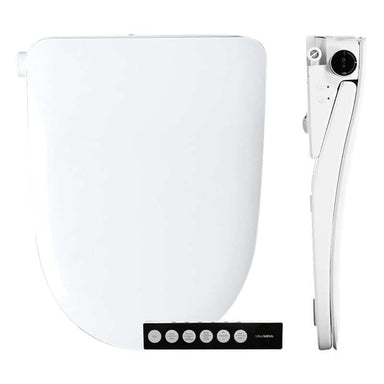
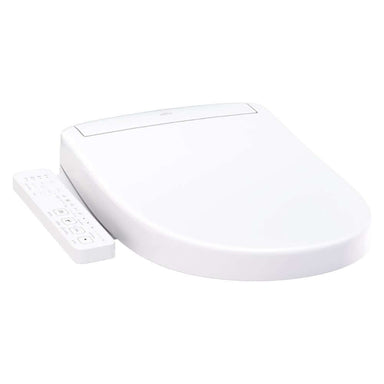
The seat heater is a warming element built into the seat ring and held at a temperature you set. On a TOTO WASHLET, an integrated sensor maintains the desired setting between 82F and 97F. How finely you can tune it depends on the model: the WASHLET S7 and S7A give you five heated-seat settings, while the A2, S2 and S5 give you three. Other brands here work the same way. The Eco Nova offers four seat temperature levels, and the Brondell Swash Thinline T44 offers three.
The heated water
The wash water comes from the same fresh supply line that fills your toilet tank, never from the bowl, and the seat heats it on the way to the nozzle. That is why a heated bidet has to be electric. A non-electric attachment has no power cord and no internal heating element, so it delivers water at whatever temperature the supply line gives it. If warm water is the reason you are shopping rather than a warm seat, start with bidets with instant and unlimited warm water.
Are Heated Bidets Worth It?
A heated bidet is worth it if your bathroom gets cold, or if you have tried a cold-water bidet and quietly stopped using it. Warm water is the difference between a wash you look forward to and one you brace for, and a warm seat removes the other objection people raise in winter. On the TOTO WASHLET S7A the lid opens as you approach and the seat begins warming immediately, reaching a comfortable temperature within seconds.
The trade is cost and power. A heated seat is always an electric seat, so you need an outlet within reach, and it costs more than a plain bidet toilet seat without heat. Set against that, families often cut toilet paper use by 75 percent or more, and a model with a warm air dryer lets some households stop buying it altogether. If cold feet in January are why you are here, this is the collection that fixes it.
How to Choose a Heated Bidet
Choosing a heated bidet comes down to four decisions: your bowl shape, how the seat heats water, where your nearest outlet is, and how many temperature settings you actually need. Get those four right and any seat here will fit and behave the way you expect.
1. Measure the bowl first
Measure from the two seat-bolt holes at the back of the bowl to the front rim. About 16.5 inches means a round bowl; about 18.5 inches means elongated. Most heated seats are sold in both shapes, so once you have the number, shop round bidet seats or elongated bidet seats.
2. Choose between tank and instantaneous heating
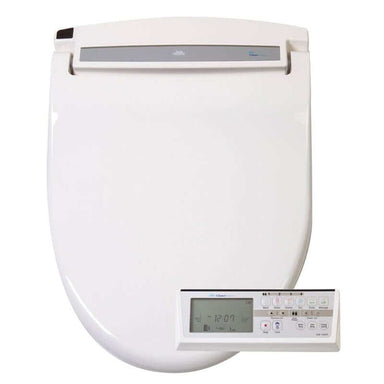
TOTO puts the difference plainly: tankless instantaneously heats only the water needed, versus a tank of stored warm water. A tank model keeps a small reservoir at your chosen temperature, so the warm water lasts about 40 seconds and then runs cold until the tank reheats. That is normal behavior, not a fault, but it is the thing people notice first. An instantaneous model heats the stream on demand, has no such limit, and changes temperature faster. The WASHLET S2, S5, S7 and S7A all heat instantaneously; the Brondell Swash Thinline T44 uses an instant ceramic heater for endless warm water, and the CleanSense 1500 and Galaxy GB-5000 use hybrid systems that supply warm water on demand without a storage tank.
3. Check the outlet before you order
A heated bidet needs a grounded outlet near the toilet, and bathroom outlets should be GFCI protected. Several brands state the distance outright: the CleanSense 1500 and the Galaxy GB-5000 both call for a GFCI outlet within three feet of the toilet, and the Eco Nova ships with a four-foot power cable for a GFCI-protected 120V outlet. Measure that run before you order, because adding an outlet is an electrician's job, not a plumber's.
4. Count the settings you will actually use
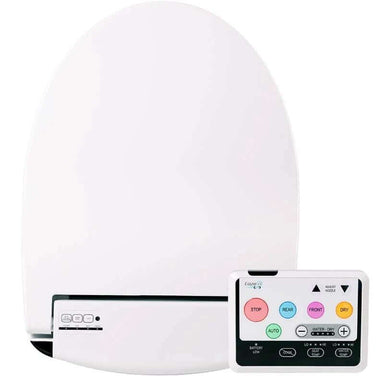
More settings is not automatically better, but it is what separates the tiers. A WASHLET S7 or S7A gives five water temperature settings; the A2, S2 and S5 give three. If you share the bathroom, look for stored user profiles: the Brondell Swash Thinline T44's wireless remote saves two, and the WASHLET S5's remote holds settings for four users. Every WASHLET also has an energy-saver timer with 6 and 9 hour options plus Auto Energy Saver. Compare the lineup in TOTO WASHLET bidet seats.
Common Problems With Heated Bidets
The common problems with heated bidets are water that runs cold, a seat that stops warming, and a seat that appears completely dead, and all three are usually a setting or the power supply rather than a fault. Work through these before you call anyone:
- Water runs cold. Check the temperature setting on the remote, then check whether energy-saving mode is lowering the water temperature during set hours. On a tank-type seat, cold water after about 40 seconds is the tank reheating.
- The seat is not warming. Check the seat temperature setting, check energy-saving mode again, and confirm the seat sensor registers that you are seated. The heater and the wash both depend on it.
- Nothing happens at all. A tripped GFCI outlet is the single most common cause of a completely dead seat. Press test, then reset.
- The spray has weakened over months. Sediment gradually blocks the mesh filter screen where the water line enters the seat. Shut off the water, disconnect the hose at the seat and rinse the mesh.
- The remote stops responding. Replace the batteries first, then check the line of sight between the remote and the receiver on the seat.
Three symptoms are different in kind: water leaking from the body of the seat rather than a hose connection, an error code that returns immediately after a power cycle, and an outlet that trips repeatedly. Unplug the seat and have it serviced. Step-by-step fixes are in the TOTO WASHLET troubleshooting guide.